Bioavailability is a class-dependent property, governed by distinct limiting mechanisms for small molecules versus biologics. While the formal definition of bioavailability remains unchanged, the dominant barriers, failure modes, and formulation levers differ substantially depending on molecular size, polarity, and susceptibility to metabolism.
1. Small molecules: hydrophobic (lipophilic) compounds
Limiting mechanisms
Small Hydrophobic molecules are frequently characterized by:
- Low aqueous solubility
- High crystalline lattice energy
- Adequate or high membrane permeability once dissolved
For these compounds, oral absorption is dissolution-rate limited, not permeability-limited. In BCS terminology, most fall into Class II (low solubility, high permeability).
Despite a favourable passive diffusion potential, insufficient luminal concentration due to poor dissolution results in subtherapeutic systemic exposure. In addition, high lipophilicity often correlates with:
- Extensive first-pass metabolism
- Efflux transporter susceptibility
- Nonlinear pharmacokinetics due to solubility-limited absorption
Formulation strategies
Bioavailability enhancement for small hydrophobic molecules may focus on increasing apparent solubility and dissolution kinetics, typically via:
- Particle size reduction (micronization, nanocrystals)
- Amorphous solid dispersions to reduce lattice energy
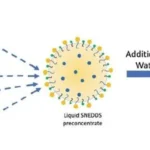
- Lipid-based delivery systems (SEDDS, SMEDDS)
These approaches elevate the thermodynamic activity of the drug in the intestinal lumen and maintain transient supersaturation, enabling increased absorptive flux before precipitation occurs.
2. Small molecules: hydrophilic (polar) compounds
Limiting mechanisms
Small Hydrophilic molecules generally exhibit:
- Higher aqueous solubility
- Poor membrane permeability
- Limited transcellular diffusion
These compounds are often permeability-limited (BCS Class III). Absorption is constrained by:
- Low lipophilicity
- Strong hydrogen bonding with water
- Inadequate partitioning into the intestinal epithelium
Paracellular transport is limited by tight junction architecture, resulting in incomplete absorption despite rapid dissolution.
Formulation strategies
For hydrophilic small molecules, formulation science aims to enhance epithelial transport, rather than solubility:
- Prodrug strategies to transiently increase lipophilicity
- Permeation enhancers that modulate tight junctions
- Carrier-mediated transport exploitation (e.g., peptide or amino acid transporters)
The challenge is to improve permeability without compromising epithelial integrity or safety, making this a narrow therapeutic optimization space.
3. Biologics: peptides and small proteins
Limiting mechanisms
Peptides and small proteins face fundamentally different bioavailability barriers:
- Enzymatic degradation by gastric and intestinal proteases
- Extremely low epithelial permeability due to molecular size and polarity
- Rapid systemic clearance if absorbed
Oral bioavailability of native peptides is typically <1%, rendering conventional oral delivery impractical without advanced delivery systems.
Formulation strategies
Bioavailability enhancement for peptides centers on protection and facilitated transport:
- Enzyme inhibitors to reduce proteolytic degradation
- Mucoadhesive systems to prolong intestinal residence time
- Permeation enhancers to enable transient paracellular transport
- Chemical modification (e.g., lipidation, cyclization) to improve stability and half-life
Despite progress, most peptide therapeutics still rely on parenteral or alternative non-oral routes (subcutaneous, intranasal, pulmonary).
4. Biologics: polynucleotides (oligonucleotides, mRNA)
Limiting mechanisms
Polynucleotides represent the most bioavailability-constrained class:
- Extreme molecular weight and charge density
- Rapid degradation by nucleases
- Near-zero passive membrane permeability
- Endosomal entrapment even after cellular uptake
For these agents, systemic exposure is formulation-dependent, and the concept of bioavailability extends beyond absorption to include intracellular delivery and functional availability.
Formulation strategies
Successful delivery of polynucleotides relies on complex carrier systems, such as:
- Lipid nanoparticles (LNPs)
- Polymer-based vectors
- Ligand-targeted delivery systems
These formulations:
- Protect cargo from degradation
- Facilitate cellular uptake
- Enable endosomal escape, a critical determinant of pharmacological activity
For nucleic acid therapeutics, bioavailability is therefore best conceptualized as delivery efficiency to the site of action, not merely plasma exposure.
Comparative perspective
| Molecular Class | Primary Limitation | Formulation Objective |
| Hydrophobic small molecules | Poor solubility in body fluids | Increase dissolution and supersaturation |
| Small Hydrophilic molecules | Poor permeability through membranes | Enhance epithelial transport |
| Peptides | Enzymatic degradation + permeability | Protect and enable absorption |
| Polynucleotides | Stability + cellular delivery | Enable intracellular bioavailability |
Conclusion
Bioavailability is not a single mechanistic problem but a class-specific optimization challenge. For small molecules, formulation strategies primarily manipulate solubility–permeability trade-offs, whereas for biologics, the central challenge is overcoming biological exclusion mechanisms at both tissue and cellular levels. Modern formulation science thus operates as an enabling discipline, transforming molecular entities into clinically viable therapeutics by tailoring delivery strategies to molecular class–specific constraints.
For readers who want a foundational overview of oral bioavailability, absorption barriers, and how different molecular classes behave in the GI tract, see our companion article: Bioavailability Explained.
For a broader scientific context on bioavailability, pharmacokinetics, and ADME principles across drug classes, the article on Wikipedia provides a useful high-level reference.
For deeper discussion of formulation strategies, drug delivery systems, and class‑specific challenges such as permeability‑limited absorption, dissolution‑limited absorption, and intracellular delivery for nucleic acids, our RD Blog covers these topics in greater detail.